Insights
From Abstract to Insight: A Step-by-Step Look at Conference Intelligence Done Right
Conference intelligence is more than collecting abstracts and clinical updates. It's about understanding what new findings mean, tracking competitor developments, and turning scientific information into actionable insights that support better strategic decisions.
ConfXcel Team·22 Oct 2026· 6 min read
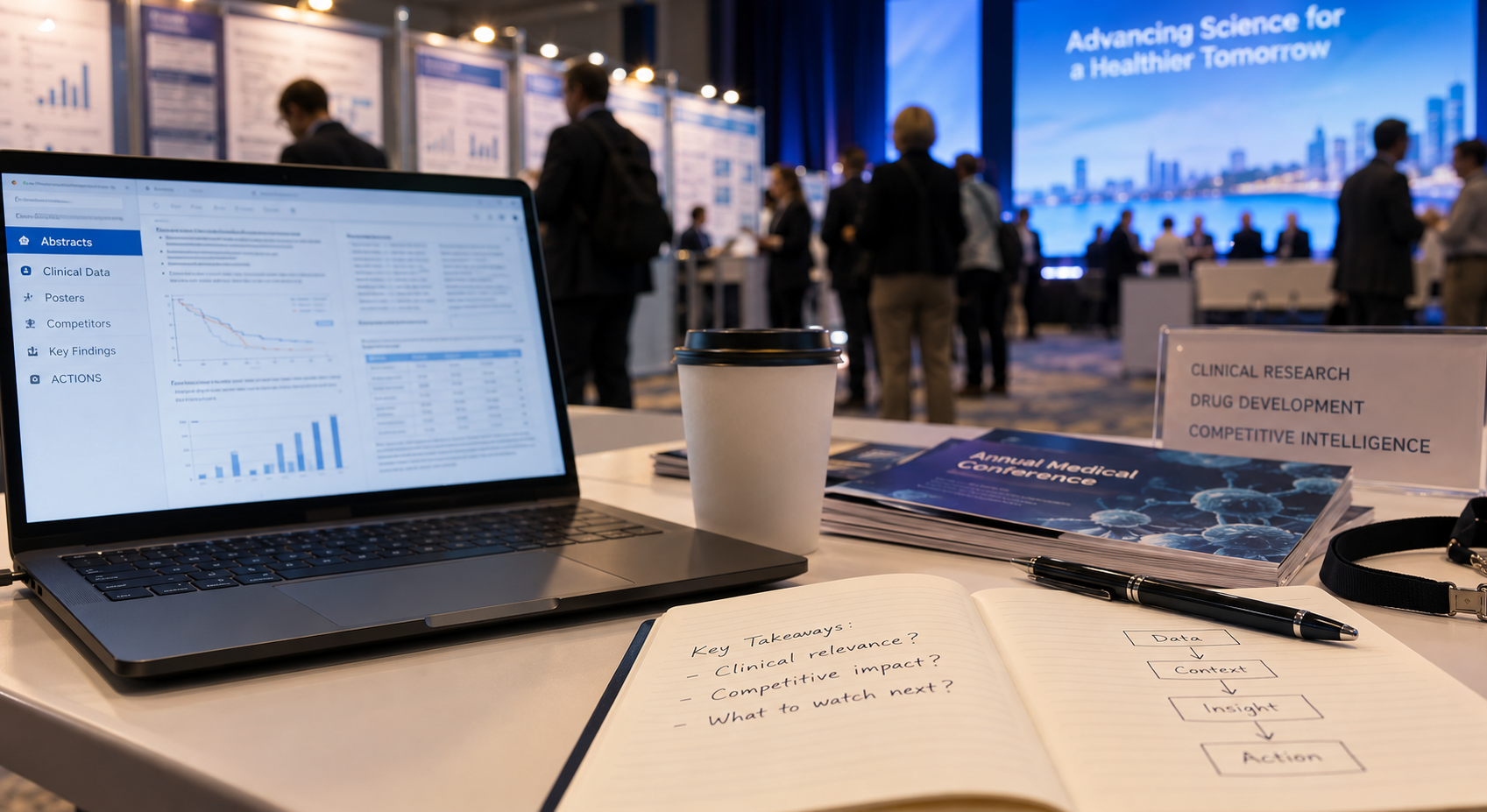
Every major pharmaceutical conference generates a huge amount of information. New clinical data, research abstracts, poster presentations, competitor updates, and discussions about emerging therapies all arrive within a short period.
For competitive intelligence (CI) teams, the challenge isn't finding information. It's figuring out what matters.
A competitor presenting positive clinical results is news. Understanding whether those results change its competitive position is intelligence.
That distinction is what separates conference coverage from conference intelligence done right.
1. Start With a Clear Objective
The work begins before the conference itself.
Rather than reviewing every abstract without a specific direction, CI teams should first establish what they need to understand. Are they tracking a competitor's clinical programme? Monitoring a new mechanism of action? Looking for changes in treatment strategies or potential shifts in the competitive landscape?
These questions help prioritize abstracts, sessions, and companies worth monitoring.
Without a clear objective, teams risk spending hours collecting information that adds little value to decision-making.
The goal isn't to capture everything. It's to identify the information that matters to the business.
2. Look Beyond the Headlines
An abstract might report encouraging clinical results, but the headline rarely tells the whole story.
What was the study designed to demonstrate? How many patients were included? Were the findings consistent with earlier data? What were the safety outcomes? And how do the results compare with existing evidence? Sometimes, the most important detail isn't the primary result. It could be a new patient subgroup, an unexpected safety finding, or a change in the endpoints being emphasized.
These details can reveal questions worth investigating further.
Good conference intelligence means reading critically, checking the evidence, and understanding the limitations of the findings. Preliminary results should not be treated as definitive proof, and promising data should not automatically be interpreted as a competitive advantage.
Before asking what the results mean, we need to understand what they actually show.
3. Connect the Dots Across Conferences
A single presentation offers a snapshot. Tracking the same programme over time reveals a more complete picture.
Consider a competitor presenting early safety data at one conference, efficacy findings at another, and additional patient subgroup analyses months later.
Viewed separately, these updates may seem routine. Together, they help explain how the programme is progressing, which questions are being explored, and what evidence is still missing.
Previous conference presentations, clinical trial registries, scientific publications, and company announcements provide valuable context.
They help analysts distinguish genuinely new findings from previously disclosed information and recognize when fresh evidence changes an earlier assessment.
This is why conference intelligence should not end when an event does. The real value often comes from connecting today's findings with yesterday's evidence.
4. Identify the Signals That Matter
Not every update deserves the same level of attention.
A routine data update may require a brief record, while findings that address an important treatment limitation could justify a deeper assessment.
A useful way to evaluate new information is to ask three questions:
- What changed? Identify the new finding or development.
- Why does it matter? Assess its scientific and competitive relevance.
- What comes next? Determine which upcoming milestones could clarify its significance.
This approach helps teams separate routine updates from developments that could influence future decisions.
It also makes reporting more focused. Instead of presenting stakeholders with a long list of conference highlights, CI teams can explain which findings deserve attention and why.
5. Compare Competitors With Context
Competitive comparisons are valuable, but comparing clinical results isn't as simple as placing numbers side by side.
Two studies may involve different patient populations, endpoints, treatment settings, or follow-up periods. These differences can significantly affect how results should be interpreted.
For example, a higher response rate in one trial does not automatically establish that a treatment is superior to another.
A meaningful comparison considers study design, efficacy, safety, durability, dosing, patient selection, and the maturity of the evidence.
It also acknowledges where direct comparisons are unreliable.
The objective is not to rank competitors based on incomplete information. It is to understand where their programmes may be differentiated, where uncertainties remain, and what future evidence could change the assessment.
Sometimes, recognising that the evidence is insufficient is just as important as identifying a potential advantage.
6. Turn Findings Into Insights
This is where conference intelligence becomes genuinely useful.
An abstract summary tells us that a competitor has reported promising results. An intelligence assessment explores what those results could mean in the context of its wider development strategy.
Could the findings strengthen the asset's positioning? Do they address a previously identified limitation? Is further evidence needed before the development becomes strategically significant?
Consider a hypothetical competitor reporting encouraging results in a specific patient subgroup. Rather than immediately treating this as a competitive threat, the CI team could assess the study's limitations, compare the findings with existing evidence, and identify upcoming trials that might confirm or challenge the results.
This creates a clearer picture of both the opportunity and the uncertainty.
The distinction between fact and interpretation matters here. Teams should explain what the evidence demonstrates, what it might suggest, and what remains unknown.
Good intelligence doesn't need to make dramatic predictions. It needs to help decision-makers ask better questions.
7. Deliver Intelligence People Can Use
Even strong analysis can lose its impact when buried in a lengthy report.
Clinical development teams may need detailed assessments of trial design and endpoints. Senior leadership may prefer a concise explanation of the most important findings and their potential implications.
The format should reflect the audience and the decision being supported.
Whether the output is an executive summary, competitor tracker, or scientific deep dive, three questions should remain clear:
What happened? Why does it matter? What should we watch next?
Important findings should also be traceable to their original sources, allowing stakeholders to verify the evidence behind an assessment.
And the work shouldn't stop when the report is delivered. Significant developments need to be revisited as new data emerge and earlier assumptions are tested.
The Difference Is in the Follow-Through
Conference intelligence isn't measured by the number of abstracts reviewed or reports published. Its value lies in whether it improves understanding, challenges assumptions, or helps teams prepare for important decisions.
Technology can make information collection faster, but scientific interpretation still requires judgement, context, and careful evaluation.
Ultimately, the process is straightforward: ask the right questions, examine the evidence, connect new findings with previous developments, and explain their potential significance.
Not every abstract will reveal something important. Sometimes, a new result simply confirms what was already known. Other times, one overlooked detail can change how a competitor's programme is understood.
The real value of conference intelligence isn't knowing what was presented. It's understanding what changed, why it matters, and what deserves attention next.
Conference Intelligence Pharma Strategy Clinical Trial Insights